Associate Fellow, Manohar Parrikar IDSA, Dr. Anand Kumar’s article, ‘South Asia sits on a powder keg’ has been published in ‘The Statesman’ on October 27, 2021.
The return of the Taliban in Kabul has intensified the sectarian and communal strife in South Asia. The United States had entered Afghanistan to uproot the Taliban and eliminate Al-Qaeda. Both these objectives remained unfulfilled when they withdrew, says Dr. Anand.
Associate Fellow, Manohar Parrikar IDSA, Dr. Anand Kumar’s article ‘Needed: A New Policy for Kashmir’ has been published in Daily Excelsior on October 19, 2021.
India should start arming minority community and train them in self-defense so that they can protect themselves in the face of terror. Besides the government also has to bring policies which creates a balanced demography in the Kashmir valley. These are extra –ordinary measures, but they are required in these extra-ordinary times to maintain the unity and integrity of India, says Dr. Kumar.
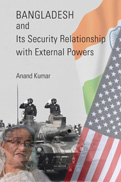
Associate Fellow, Manohar Parrikar IDSA, Dr. Anand Kumar's book on Bangladesh titled, 'Bangladesh and its Security Relationship with External Powers' has been published by KW Publishers.
A state’s security is heavily dependent upon its geopolitical environment. The geopolitical setting of South Asia changed in 1971 with the birth of Bangladesh as a new, independent nation. India already faces a hostile neighbour on its western border. In the north, China is a major threat. In this geopolitical setting the kind of relationship India has developed with Bangladesh becomes important.
The military coup of August 1975 in Bangladesh marked a major shift in the way the country perceived its foreign and defence policies. India, its supporter in the liberation war, was now presented as the main threat to national security. A country’s defence policy and defence-related procurements depend on the threat perception of that country. Bangladesh, despite being a poor country, has tried to acquire significant defence capability mainly due to its perceived sense of insecurity and to some extent to participate in the United Nations peacekeeping operations. Some of the steps taken by Bangladesh purportedly to enhance its own security have meant that the security environment in the region has actually deteriorated. In this context Bangladesh’s security relationship with other major powers has significant implications for Indian security, and the book tries to throw light on it.
The domestic politics of the Maldives might significantly change if the position of the MDP government weakens. It might change the flavour of India–Maldives bilateral relationship and will also have an impact on the security environment in the Indian Ocean region.
The Russia–Myanmar relationship is gathering strength. Bangladesh wants to use the increasing bonhomie between Russia and Myanmar to start a tri-lateral process to reach an amicable solution to the Rohingya refugee crisis.
Anand Kumar’s article ‘India needs a plan to recover PoK’ has been published in Daily Excelsior.com Associate Fellow, Manohar Parrikar IDSA, Dr. Anand Kumar’s article ‘India needs a plan to recover PoK’ has been published in Daily Excelsior.com, on August 04, 2021.
Though India has denounced the attempt of Pakistan to hold fake elections in PoK, it has to come up with other strategies to highlight the illegal occupation of PoK by Pakistan. Only occasional statements in this regard would not be sufficient, says Dr. Kumar.
Associate Fellow, Manohar Parrikar IDSA, Dr. Anand Kumar’s article ‘Migration from Bangladesh’ has been published in Daily Excelsior on July 17, 2021.
The issue of illegal migration can’t be swept under the carpet given its magnitude and the sentiments of people in the northeastern India who fear being swamped by the people continuously coming from across the border. Attempt should be made to sort out this issue in an amicable way without hurting the India-Bangladesh bilateral relationship which is perhaps enjoying its best phase, says Dr. Kumar.
Anand Kumar’s Article on Illegal Infiltration from Bangladesh Published in Amar Ujala
Associate Fellow, Manohar Parrikar IDSA, Dr. Anand Kumar’s article on illegal infiltration from Bangladesh has been published in leading Hindi daily ‘Amar Ujala’ on July 12, 2021.
Associate Fellow Manohar Parrikar IDSA, Dr. Anand Kumar’s article ‘Why China won’t let India rise peacefully’ has been published in ‘The Statesman’ on September 23, 2020.



![Read More[+]](https://idsa.in/system/files/news/AnandArt12JulyAmarUjala.jpg)
Implications of Political Dissonance in the Maldives
The domestic politics of the Maldives might significantly change if the position of the MDP government weakens. It might change the flavour of India–Maldives bilateral relationship and will also have an impact on the security environment in the Indian Ocean region.