RESEARCH CENTRE

Strategic Technologies

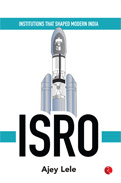
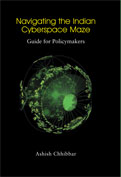
The Strategic Technologies Centre focuses on issues related to strategic technologies that have a potential impact on national security. Its main focus is on critical technologies and space technologies. The Centre is engaged in tracking and trend analysis of issues related to Space Security and Cyber Security.

The other mandate of the Centre is to undertake research on Biological and Chemical Weapons with a focus on studying the dangers of proliferation and terrorism. The Centre is responsible for the publication of the CBW Magazine - a bi-annual magazine which covers a wide range of issues related to the Chemical and Biological Weapons.

Click here for articles on Strategic Technologies, Modelling & Net Assessment from our bi-monthly journal Strategic Analysis.

Experts


Research Fellow Associate Fellow Research Assistant


Outer space comes closer to a regime

May 20, 2013

The Group of Government Experts need to take into consideration complex and inter-related concerns of space activities before formulating the Transparency and Confidence Building Measures. The need is to have an effective mechanism and not an accommodative one.

India's Nuclear Triad: A Net Assessment

2013

This paper discusses such delivery mechanisms commonly known together as nuclear triad in the Indian context. The paper has four major parts. The first part attempts to set the context for the overall discussion. The second, third and fourth parts deals with the evaluation about missile forces, aerial platforms and submarine based platforms for nuclear weapon delivery on the targets.

China’s ‘String of pearls’ in Space

March 21, 2013

A ‘pearl’ could be viewed as a sphere of influence seeded, secured and maintained through the use of economic, geopolitical, diplomatic or military means.

Innovation: The New Mantra for Science and Technology Policies in India, Pakistan and China

March 7, 2013

“Innovation” has become a buzz word in recent science and technology policies of various countries. It has also been given ample importance in the science and technology policies and programmes of India, China and Pakistan. It is interesting to know on what exactly these countries are focusing in their recent science and technology policies and how these new policies and programmes will help them in social development, economic growth, technology innovation and pursuing national interests.

Successful PSLV-C20/SARAL Mission: India’s French “Space” Connect

March 7, 2013

For almost the last 50 years, space collaboration has significantly remained intact between France and India. They have worked together on a range of issues from satellite applications, developing small satellites to earth system science and weather satellites.

A Missile in the Monkey’s Shadow?

January 31, 2013

Iran’s investments in space should not be viewed only through the narrow prism of a nuclear threat but as a nascent attempt to challenge the West’s technological domination.

India’s New Science Policy is about Innovation

January 9, 2013

STI 2013 envisages the creation of a word-class infrastructure for R&D and skill development as well as encouraging the scientific community by providing adequate opportunities and better career options.

The Third Review Conference of the State Parties of the Chemical Weapons Convention: Relevance for South Asia

July-December 2012

The Third Review Conference of the Chemical Weapons Convention (CWC) is scheduled to take place in Hague during 8-19 April 2013. The previous two review conferences were held in 2003 and 2008. They stressed on the ‘Universality’ of the CWC. This conference is also expected to continue along the same principle.

Chemical Weapons Profile of Angola

July-December 2012

Angola, a country in southern Africa, which has no officially confirmed history of possession and use of chemical weapons by the state. However, it should be noted that South Africa, in defence of its earlier chemical and biological weapons programme, often cited the capture of chemical detection and decontamination equipment and treatment systems in Angola. There were instances of chemical weapons being used inside Angola when it was under Portuguese colonial rule.

Civil Society, Chemical Industry and the Chemical Weapons Convention

July-December 2012

Civil society has played a very important role in the framing of the regime against chemical weapons. Following the adoption of the Biological Weapons Convention in 1972, Civil society actively supported negotiations that led to the adoption of the Chemical Weapons Convention (CWC) in 1992. However after coming into force the relationship between CWC and Civil Society underwent an important change.

Syndicate content