Ashok Kumar Behuria replies: I presume the question pertains to the rise of the Pakistani Taliban.
The Pakistani Taliban's rise is both due to acts of omission and commission on the part of the government in Pakistan. When the US launched its war on terror, Pakistan willingly joined it as a partner and pledged to sever its links with the Afghan Taliban. However, in reality it provided these elements sanctuary in both Quetta (Balochistan) and Federally Administered Tribal Areas (FATA). The Afghan Taliban had sympathisers among the local population, some of whom had even fought along with them during their rise as a political force in Afghanistan. As Pakistan hobnobbed with these forces even after joining the war on terror in Afghanistan against them, the Pakistani sympathisers of the Afghan Taliban in the tribal areas slowly metamorphosed into a coalition of radical Islamist forces calling itself Tehrik-e-Taliban Pakistan, better known in its acronymic form as TTP.
While the groups consisting of TTP grew in stature and influence, the Pakistani state ignored them. Initially it sought to handle them either through talks or half hearted and episodic military thrusts that lacked both strategy and conviction. Pakistan's policy of treating the Afghan Taliban as a strategic asset forced it to turn a blind eye to the umbilical cord that brought the two groups together. When finally it decided to take on the TTP, the Afghan Taliban chose to remain neutral. However, even then, Pakistani security forces have found it difficult to deal with such an ideological group, which seeks to impose Sharia and reverse the entire process of democratic state formation in Pakistan.
Talks, that are being attempted now to reconcile the TTP with the state of Pakistan, are a legitimate option which any government worth the name would like to exercise to bring peace to its population. However, in the case of Pakistan and the TTP, such efforts may not succeed. This is mainly because of the irreconcilable positions from which they are approaching the whole issue of reconciliation. Moreover, Pakistan state has had several talks with the TTP since 2004 (the agreements of Shakai, Sararogha, Swat, etc.), which have ended in failure earlier. The talks are not going to work unless one of the parties sheds its ideological orientation and succumbs to the position of the other. Even if the strategy may look right, any desperate attempt to placate the TTP to have a positive outcome from the talks will be disastrous for Pakistan. Remember the old saying: the road to hell is paved with good intentions!!
Posted on April 4, 2014



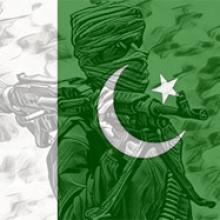
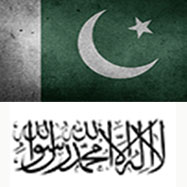



TTP’s Political Violence and Jihad
The Tehrik-i-Taliban Pakistan (TTP) claims that the Pakistani state does not practice true Islam and therefore it can wage a legitimate Jihad against it.