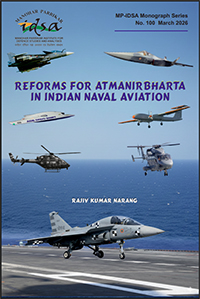
This monograph deliberates on reforms for achieving self-reliance in naval aviation. Indian Navy (IN) is at the cusp of transforming from a ‘buyers navy’ to a ‘builder navy’ in ship and submarine building; however, self-reliance in aviation remains a missing link. IN’s withdrawal from LCA Mk-1 (Navy), LCA Mk-2 (Navy), non-approval of TEDBF and lack of participation of IN in Naval AMCA has brought its Carrier Based Fighter (CBF) program to a stalemate. The incoherences in the self-reliance trajectory of CBF extends to Maritime Reconnaissance (MR), Airborne Early Warning (AEW) aircraft, helicopters and UAVs. The structures, policies and initiatives need re-orientation/ reforms for naval aviation self-reliance. The proposed apex level structural and execution level policy reforms are aimed at bringing synergy, accountability and expediting decision making. Also, elevating naval aviation self-reliance trajectory from subsystems level to platform and systems level development initiatives can be a stimulant for change. In addition, measures for mitigating aero engine vulnerabilities, scientific mechanism for Indigenous Content (IC) validation, factoring impact of ToT and imports, and spiral development approach are essential prerequisites for Atmanirbharta in Indian Naval Aviation.
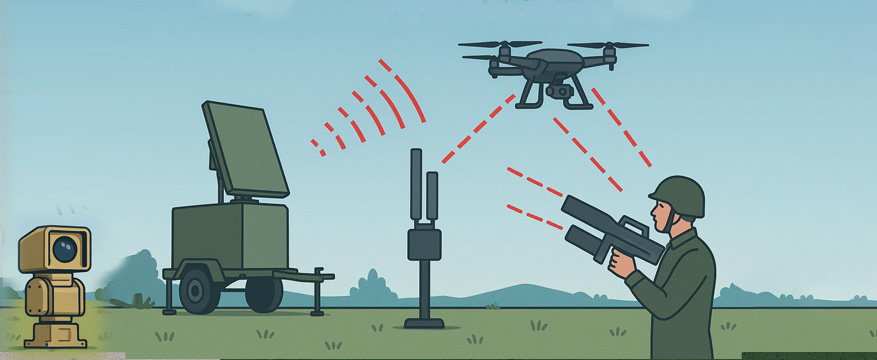
A multi-layered counter-drone architecture integrates electronic warfare systems, kinetic hard kill systems, and emerging technologies such as Directed Energy Weapons.
भारतीय विमानन टेक्नीशियन प्रमाणन नीति एवं ड्रोन टेक्नीशियन प्रमाणन नीति को वैश्विक चलन के अनुरूप सुधार करते हुए तर्कसंगत एवं व्यावहारिक बनाने की आवश्यकता है ताकि भारत में कुशल ड्रोन टेक्नीशियन उत्पन्न करने के साथ-साथ अग्निवीरों के लिए भी रोजगार के नए अवसर सृजित किए जा सकें|
First Person View (FPV) drones, combined with artificial intelligence (AI), are the next evolution in warfare as they offer a cheaper and scalable alternative to precision weapons.
The certification process needs to be made agile and transparent for enhancing skilling to meet the requirements of the Indian aviation manufacturing and the maintenance, repair and overhaul (MRO) industry.
UCAVs can impose a major decision dilemma on the adversary and act as a part of a combined arms offensive in the air, in their role as ‘loyal wingman’ for manned fighter jets.
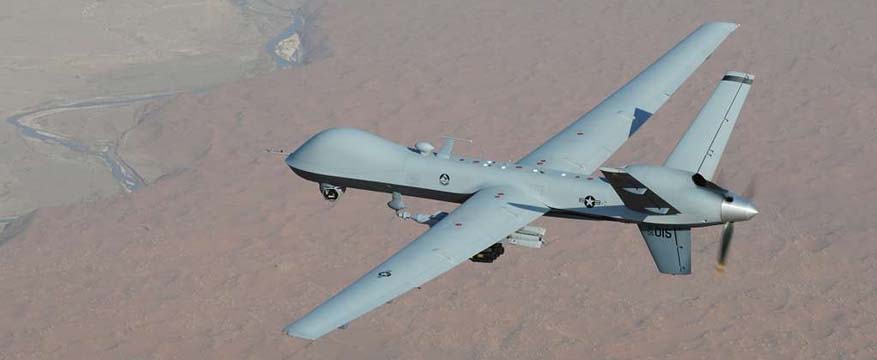
The strike against Zawahiri is being hailed as a vindication of the US’s ‘over-the-horizon’ strategy in eradicating terrorism without placing boots on the ground.