Non-Traditional Security

About Centre

The Non-Traditional Security (NTS) Centre conducts critical research and analyses in wide-ranging areas like the SDGs, climate change, water, food and energy nexus, low-intensity conflict and the Arctic region. Challenging orthodox thinking and bringing in unconventional ideas, the Centre, has well-established experts with notable publications engaged in addressing the knowledge gaps, facilitating discussions, and interfacing with varied stakeholders. The Centre publishes the bi-monthlyย NTS Digestย covering climate, food, energy and water issues. Members frequently lecture at military and training institutions and share their views at various national and international forums. As part of public awareness and sensitisation, they regularly contribute to mainstream newspapers and appear in media channels. The NTS Centre Coordinator served as Co-Chair of the Think20 Task Force of the G20 on โ€˜Accelerating SDGs:ย Exploring New Pathways to the 2030 Agendaโ€™ during Indiaโ€™s G20 Presidency.

Current Projects

Centre members are working on inter-disciplinary projects like the โ€˜Indus Waters Treaty: Changing Dynamics and Indiaโ€™s Optionsโ€™, โ€˜Human Security Policy for Indiaโ€™, and โ€˜Impacts of Climate Change in the Himalayan Regionโ€™.ย Areas of output include Indiaโ€™s SDGs targets, India-EU cooperation on climate change, India-Nepal cooperation on energy security, Indiaโ€™s climate adaptation and renewables approach, India-US maritime collaboration, and AFSPA and the Northeast region.

Members:

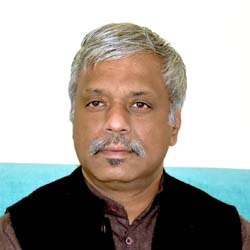
Uttam Kumar Sinha Senior Fellow
img
D. Padma Kumar Pillay Research Fellow
Opangmeren Jamir Associate Fellow
Bipandeep Sharma Associate Fellow

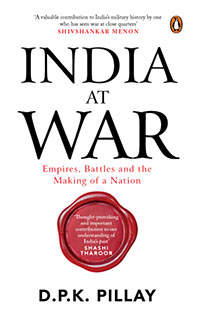
India at War: Empires, Battles and Nation Building

  • Publisher: Vintage Books

โ€˜A thought-provoking and important contribution to our understanding of Indiaโ€™s pastโ€™โ€”Shashi Tharoor, author, parliamentarian and public intellectual โ€˜A valuable contribution to Indiaโ€™s military history by one who has seen war at close quartersโ€™โ€”Shiv Shankar Menon, former national security adviser and former foreign secretary of India โ€˜โ€œA mustโ€ not only for students of military history but for all citizens of Indiaโ€™โ€”Major General Ian Cardozo (retd) โ€˜Pillay writes with the heart of a soldier, the rigour of a historian and the probing lens of a scholarโ€™โ€”Probal Dasgupta, scholar and author Indiaโ€™s story has never been one of uninterrupted peace or of permanent defeat. It is the story of a civilization that has endured invasions, empires, partitions and wars, yet has never surrendered its identity. Across millennia, kingdoms rose and fell, frontiers shifted and conquerors came and went. India was wounded at times, divided at others, but always capable of renewal. From ancient battlefields to the World Wars, where Indian soldiers fought under a foreign Crown, and to the mountains of Kashmir, where they defended a newly independent India, generations answered the call of duty. Their courage shaped history far beyond the subcontinent, yet many of their stories faded into obscurity. The history of Indiaโ€™s wars is therefore not merely a record of battles fought, but a testament to a people who refused to forget who they were. It restores these forgotten stories to their rightful place in Indiaโ€™s civilizational journey. More than a chronicle of campaigns and commanders, India at War explores memory, sacrifice, resilience and the enduring spirit of a civilization. It explores how India survived when many empires vanished into history and why its identity endured despite centuries of conflict.

  • ISBN: 9789377301040,
  • Price: โ‚น 699/-
  • E-copy available

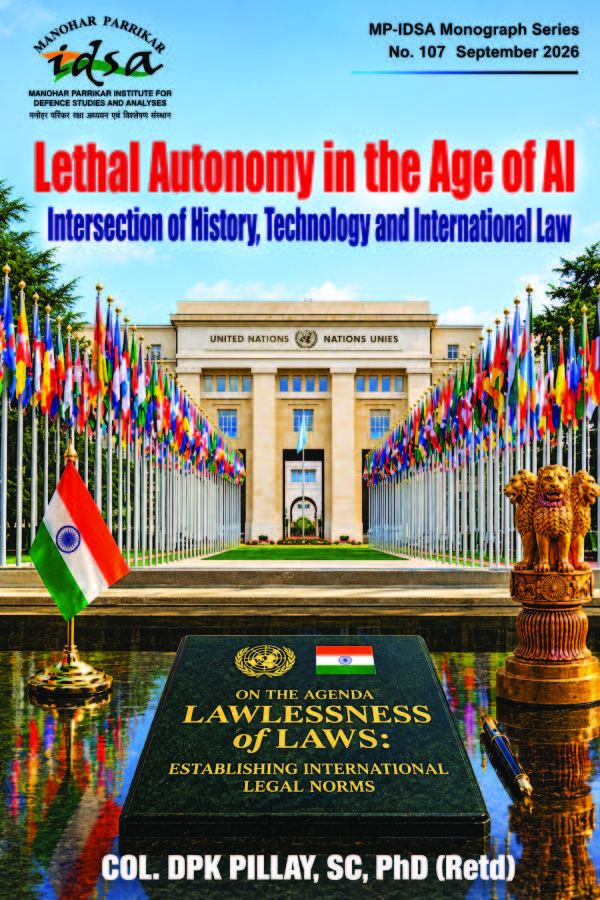
Lethal Autonomy in the Age of AI: Intersection of History, Technology and International Law

The delegation of decisions over life and death has long been one of warfare's most enduring ethical, legal, and strategic dilemmas. The emergence of Artificial Intelligence (AI) has transformed this debate from a theoretical concern into an immediate challenge through the development of Lethal Autonomous Weapon Systems (LAWS). This monograph examines how existing International Humanitarian Law (IHL) addresses autonomous weapons by analysing the historical evolution of the laws of armed conflict, deliberations within the Convention on Certain Conventional Weapons (CCW), international governance initiatives, state practice, military doctrine, and contemporary battlefield experience. It compares national approaches to regulating AI-enabled warfare, evaluates India's evolving position, and identifies the legal, ethical, and operational challenges posed by increasing autonomy. The monograph argues that preserving meaningful human judgement and accountability remains fundamental and offers recommendations to strengthen India's legal, policy, technological, and institutional preparedness for the age of AI-enabled warfare.

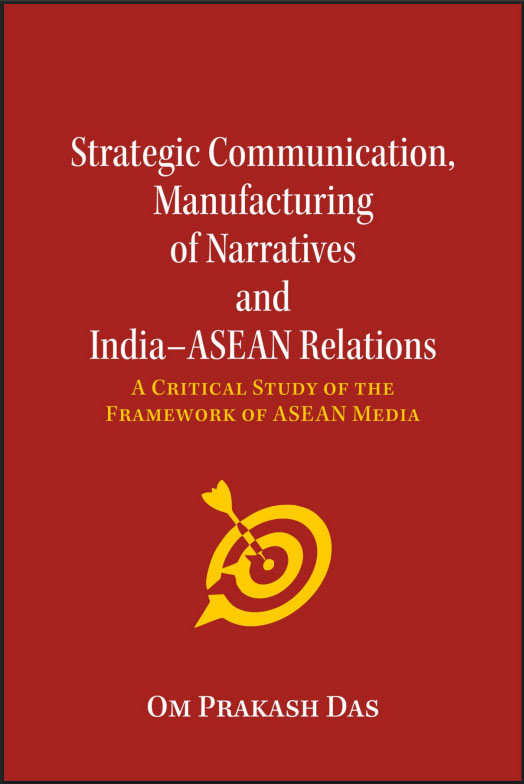
Strategic Communication, Manufacturing of Narratives and Indiaโ€“ASEAN Relations

  • Publisher: Pentagon Press

In a world where perception dictates power, the book Strategic Communication, Manufacturing of Narratives and Indiaโ€“ASEAN Relations uncovers the hidden architecture of influence shaping Southeast Asia. This critical study deconstructs how ASEAN media "re-presents" India, revealing a systemic "visibility without intimacy" that reduces a complex civilization to a mere geopolitical utility. By exposing the "information colonialism" of Western wire services and the calculated editorial logics of regional states, the work challenges the very foundations of contemporary diplomacy. It is an essential roadmap for understanding the battle for narrative autonomy in the Southeast Asia.

  • ISBN: 978-81-994764-1-7,
  • Price: โ‚น 1495/-
  • E-copy available

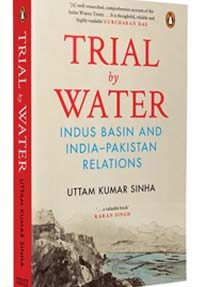
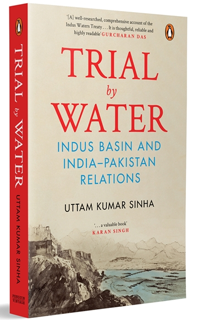
Trial by Water: Indus Basin and India-Pakistan Relations

  • Publisher: Penguin Random House India
In 1947, the Indian subcontinent was partitioned, and Pakistan was born. A shared heritage, a composite culture and centuries-old bonds between people, all seemed to vanish overnight. Nowhere was this rupture more profound than in the Indus Basinโ€”once a unified lifeline of the region, now fragmented by sovereign borders, its rivers flowing through two nations immediately at odds with each other. The Indus Waters Treaty was signed in 1960, proving that even bitter adversaries could cooperate over shared resources. Yet, it never brought lasting peace. The treaty was suspended by India in April 2025 as a punitive measure in the wake of the Pahalgam terror attack, and its future remains shrouded in uncertainty. Can it still endure and adapt? Perhaps the time has come for a new arrangementโ€”one that is not just inevitable but essential. This book traces the turbulent history of the Indus Basin and examines how the Indus Waters Treaty has been shaped by the regionโ€™s ever-evolving political dynamics. It explores the role of key leaders on both sides, as well as external pressures, in shaping and reshaping one of the worldโ€™s most critical transboundary water agreements. The Indus Basin has been a witness to conflict, compromise and survival. And if you seek to understand the true nature of Indiaโ€“Pakistan relations, start with the rivers that bind them. Trial by Water leads us in that direction.
  • ISBN: 9780143471028,
  • Price: โ‚น 599/-
  • E-copy available

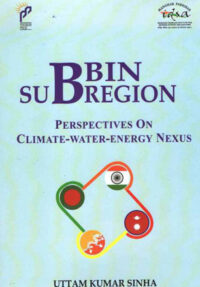
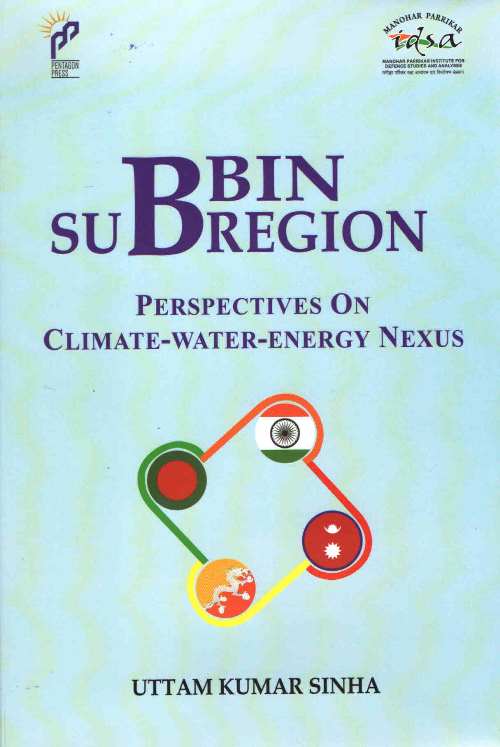
BBIN Sub-Region: Perspectives on Climate-water-Energy Nexus

  • Publisher: Pentagon Press
Bangladesh, Bhutan, India and Nepal (BBIN) are home to 21 per cent of the worldโ€™s population. With projected economic growth in the BBIN countries, a consequent increase in the demand for electricity and heavy dependence on fossil fuels are expected despite the pitch for renewable energy. The region also faces unprecedented climate change, particularly in the Hindu Kush Himalaya, the cradle of major sub-continental rivers, and where melting glaciers, unpredictable weather conditions, and rainfall patterns are affecting the life of millions and instigating frequent natural disasters. Since 2014, India has tried to maximise sub-regional interaction with the aim of promoting cooperation in the economic, social, cultural and scientific fields. This has opened new thinking and opportunities, complementing the pace of globalisation and liberalisation. The fear, of course, is that this approach can easily dissipate in the face of security complexities and political difficulties.

The climate-water-energy nexus is now a familiar concept in the resource management debate requiring long-sighted approaches that help avoid maladaptive pathways and, as a tool, to anticipate the tilt and balance of the nexus resources and the nature of their interactions. The nexus as a policy approach brings together the concept of โ€˜security and sustainabilityโ€™. However, the framing of the nexus around a scarcity crisis narrative often pushes states towards control and possessiveness of the resources rather than driving them towards stability and durability solutions. Beyond this framework, a more nuanced politicalโ€“economy understanding of the BBIN sub-region is essential.

  • ISBN: 9788195189458 ,
  • Price: โ‚น 995/-
  • E-copy available

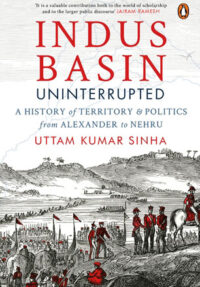
Indus Basin Uninterrupted: A History of Territory and Politics from Alexander to Nehru

  • Publisher: Penguin Random House India
The Indus Waters Treaty between India and Pakistan marks six decades, but carries the reflection of several thousand years of history. Indus Basin Uninterrupted, with an easy narration and rich archival material, brings alive a meandering journey of peace, conflict and commerce on the Indus basin. The Indus system of rivers, as a powerful symbol of the passage of time, represents not only the interdependence and interpenetration of land and water, but equally the unfolding of political identities, social churning and economic returns. From Alexander's campaign to Qรกsim crossing the Indus and laying the foundation of Muslim rule in India; from the foreign invaders and their 'loot and scoot' to the Mughal rulers' perspective on hydrology and water use; from the British 'great game' on the Indus basin to the bitter and bloody Partition; and finally, as a historical pause, the signing of the Indus Waters Treatyโ€”this book is a spectrum of spectacular events, turning points and of personalities and characters and their actions that were full of marvel.
  • ISBN: 9780670094486,
  • Price: โ‚น 799.00

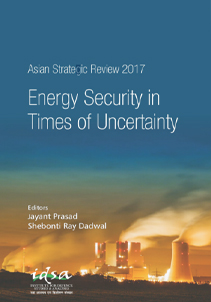
Asian Strategic Review 2017: Energy Security in Times of Uncertainty

  • Publisher: Pentagon Press

The world is entering an era with increased global demand for energy, price volatility, and rising concerns about environmental burdens and the global impact of climate change. Directly or indirectly, these factors have given rise to related concerns such as deregulation and geopolitical uncertainties. Moreover, the challenges related to the energy issue go beyond scientific or technological aspects and extend to access to resources, regional conflicts, pricing and energy infrastructure management.

  • ISBN: 78-93-86618-28-3,
  • Price: โ‚น 795/- , $27.95/-
  • E-copy available

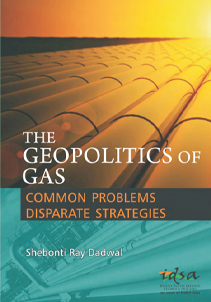
The Geopolitics of Gas: Common Problems, Disparate Strategies

  • Publisher: Pentagon Press

This volume looks at the evolving gas market and the various players who influence it -- both as producers and consumers. However, some of the players, such as Australia and the new African producers, as well as Japan and South Korea, the two largest LNG consumers, have not been included as their approach tends to be more commercial than geopolitical in nature.

  • ISBN 978-81-8274-900-9,
  • Price: โ‚น 995
  • E-copy available

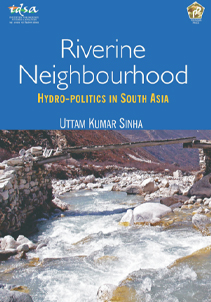
Riverine Neighbourhood: Hydro-politics in South Asia

  • Publisher: Pentagon Press

Rivers are the most visible form of fresh water. Rivers are ancient and older than civilizations a โ€˜mini cosmosโ€™ spawning history, tales, spirituality, and technological incursions. Flowing rivers are the largest renewable water resource as well as a crucible for both humans and aquatic ecosystem.

  • ISBN 978-81-8274-914-6,
  • Price: โ‚น 895
  • E-copy available

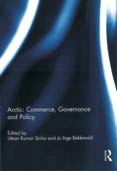
Arctic: Commerce, Governance and Policy

Publisher: Routledge
ISBN: 978-1-13-885599-1
Price: $145.00
In May 2013, China, India, Japan, Singapore and South Korea (Asia 5) were given status as permanent observers in the Arctic Council. It was a symbolic and significant moment in the history of Arctic affairs. The list of stakeholders in the Arctic has now expanded to include both the Arctic littoral states and the five Asian states. The drivers and policies of these stakeholders on the Arctic vary, but research on climate change, possible changes to the global energy and minerals markets, adherence to international norms like the UNCLOS, and geopolitical considerations are issues of concern.


Guidelines for an Oil Policy

Energy resources, and particularly oil, have become a major factor in the strategic debate all over the world. In this context, an oil policy for India assumes crucial significance, especially in view of the inadequate attention paid to this sector in the last decade. It will be presumptuous to attempt the formulation of an exhaustive or even a comprehensive oil policy in the course of an article. An attempt will, therefore, be made here to give only the broad guidelines on the issues of policy on which clarity is still lacking or where the policy has not been enforced for some reason or the other.

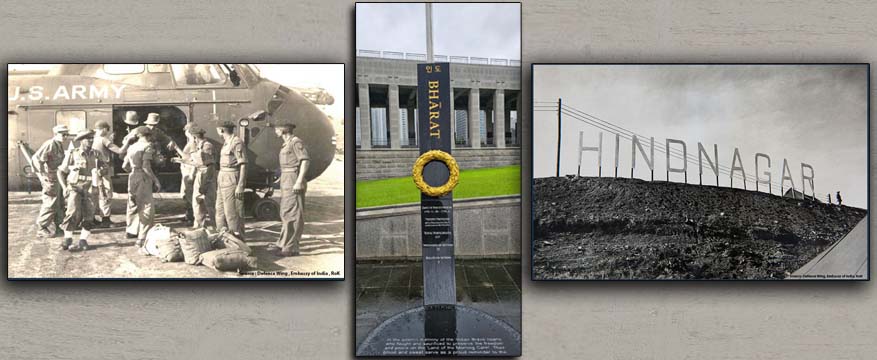
Indiaโ€™s Balancing Act: Neutrality, Diplomacy, and Humanitarian Aid in the Korean War

The Korean War (1950โ€“1953) stands as one of the earliest and most defining conflicts of the Cold War period, shaped by the geopolitical rivalry between the United States and the Soviet Union. While the historiography of the conflict has focused predominantly on the military campaigns of the major powers and the internal dynamics of the two Koreas, Indiaโ€™s diplomatic, humanitarian, and peace implementation role remains comparatively underexplored. As a newly independent post-colonial State, India entered the conflict not as a combatant but as a mediator, combining principled neutrality, humanitarian assistance, and high-level institutional diplomacy. This article argues that Indiaโ€™s contribution extended far beyond humanitarian assistance, demonstrating how a middle power could exercise influence disproportionate to its material capabilities through diplomatic credibility, institutional leadership, and humanitarian action.

Prioritising Human Development: A Blueprint for the World from Indiaโ€™s Journey from Pre-MDG Successes to SDGs

This article examines Indiaโ€™s comprehensive journey towards sustainable development, demonstrating the deep alignment between its national priorities and the global development agenda even before the advent of the Millennium Development Goals (MDGs). The article highlights the nationโ€™s significant achievements in critical areas such as poverty reduction, health, financial inclusion, and environmental sustainability. Acknowledging persistent challenges in achieving all targets, we identify key areas requiring focused intervention for future progress. Ultimately, Indiaโ€™s distinctive development model, characterized by its immense scale, profound diversity, and global engagement, serves as a valuable blueprint for sustainable development in the Global South and beyond.

Challenges to Deep-Decarbonization to Achieve Net Zero for India: A Review

Achieving net-zero emissions is essential to limiting global warming, and Indiaโ€™s role is critical given its size, developmental needs, and rising energy demand. This article reviews recent academic and grey literature to identify key challenges to deep decarbonization in India, with a focus on the near term. It introduces a conceptual framework that groups these barriers into three broad categories: techno-economic, governance and institutional, and socio-economic and political economy. Within this structure, it analyses sector-specific obstacles in power, industry, and transport. The review highlights cost and financing barriers, regulatory and institutional limitations, and complex socio-political trade-offs. The article concludes by identifying opportunities for targeted interventions and outlines research and policy gaps that need urgent attention to ensure Indiaโ€™s transition to net zero aligns with its development priorities.

Divided Arctic in a Divided World Order

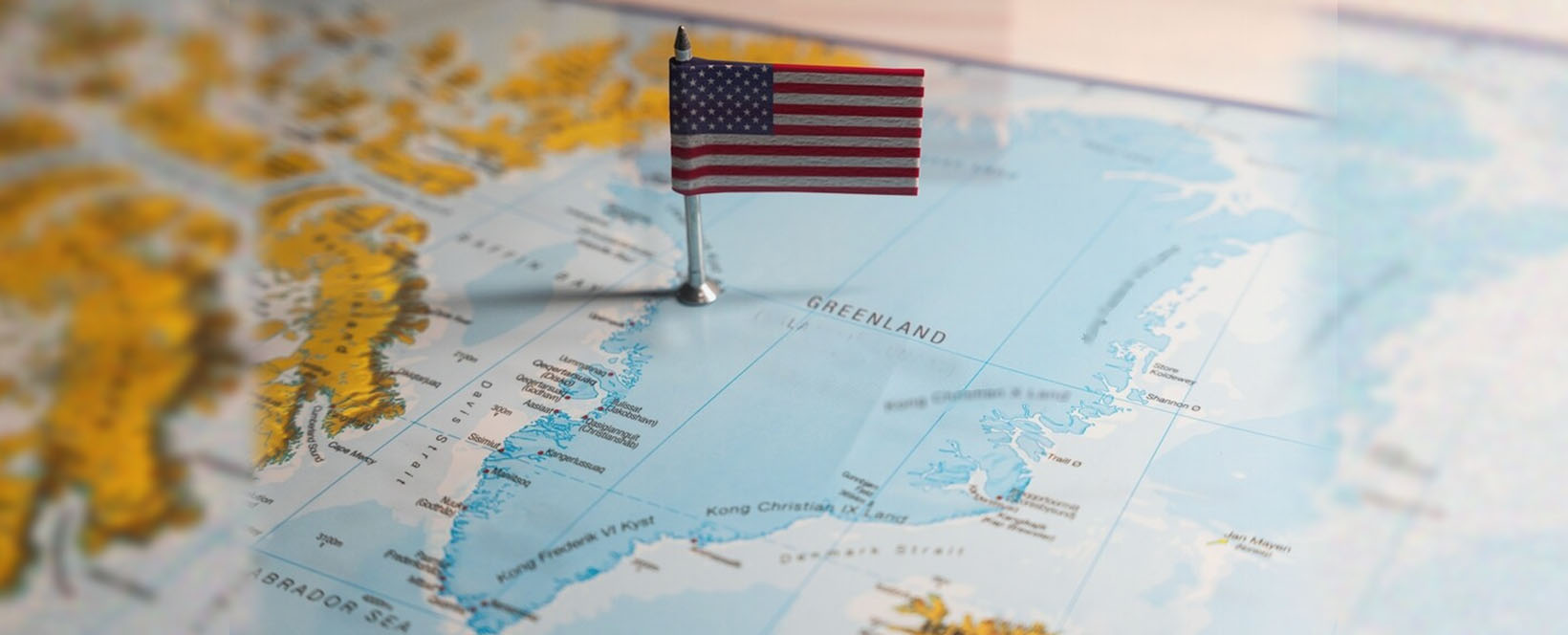
Arctic order historically, currently, and in the future reflects the world order. The idea of โ€˜Arctic exceptionalismโ€™ is not valid and is a poor guide for policy. During Cold War bipolarity, the Arctic was divided between the Soviet Arctic and the Nordic and North American Arctic. US victory and Soviet defeat in the Cold War led to US unipolarity and hegemony which was the basis for a circumpolar (including Russia) liberal (as opposed to realist) Arctic order with organizations, such as the Arctic Council, International Arctic Science Committee, University of the Arctic, Barents and Bering regional cooperation, all on liberal topics such as science, environment, Indigenous rights, people-to-people cooperation.

Hot Stakes in the Arctic: Global Rivalries and New Geopolitical Forces

The Arctic, so exquisitely remote, seems at times to drift beyond the reach of global politics. In this frigid expanse, the Arctic Council, an intergovernmental forum standing as a rare bridge, kept its most formidable of rivalsโ€”Russia and the USโ€”together, compelling the two to cooperate even as they continued to lock horns elsewhere. It seemed almost too good to be true. The enduring East-West peace once held in the Arctic has come under unaccustomed strain due to the Russia-Ukraine conflict, disrupting governance, research and economic activity while challenging decades of practical and operational cooperation across the regionโ€™s vast landscapes and seascapes spanning the northern reaches of North America, Europe and Asia.

The Formation of the Indian Diaspora

The Indian Diaspora is one of the worldโ€™s largest overseas groupings. The Diaspora is considered India's 30th state with over 30 million overseas Indians. This article outlines the main strands of its formation, from the first movement of indentured workers and subsequent phases of migration of skilled professionals to the West and of workers to the Persian Gulf. They remain the singleโ€“largest contributor of foreign exchange and development in the country. Understanding its formation is an essential step for studying the Diaspora and engaging with it. This article aims to do that.

From Energy Security to Energy Dominance: USโ€™ Blending of Politics and Economics

In the aftermath of the successful โ€˜America Firstโ€™ or โ€˜Make America Great Againโ€™ presidential election campaign, President Trumpโ€™s era inaugurated the realm of energy politics. It began with the US withdrawal from the Paris Climate Agreement and the lifting of the US export ban on crude oil. So far, it has been featured in setting aside President Obamaโ€™s climate change mitigation policy, which emphasized regulation, discouraged oil and gas development, and denounced the extensive exploitation of natural resources.

Food Security in India: Evolution, Efforts and Problems

This article examines Indiaโ€™s efforts to achieve food security. It traces the problem, from the inadequate production of food grains during colonial times, to the challenges of procurement, storage and distribution of cereals in post-independence India, after achieving self-sufficiency in food production. The establishment of the Public Distribution System (PDS) and its evolution into the Targeted PDS and the National Food Security Act are outlined. The role of the Food Corporation of India and the efforts to improve it, are discussed.

เคฎเฅเคฏเคพเค‚เคฎเคพเคฐ เคšเฅเคจเคพเคต 2026: เคธเค‚เคตเฅˆเคงเคพเคจเคฟเค• เคฌเคนเคพเคฒเฅ€ เคฏเคพ เคธเฅˆเคจเฅเคฏ เคตเคฐเฅเคšเคธเฅเคต เค•เคพ เคจเคฏเคพ เค…เคงเฅเคฏเคพเคฏ?

เค—เฅƒเคนเคฏเฅเคฆเฅเคง เค•เฅ‡ เคฌเฅ€เคš เคนเฅเค เคฎเฅเคฏเคพเค‚เคฎเคพเคฐ เคšเฅเคจเคพเคต เค•เฅ‡ เคฌเคพเคฆ เคญเฅ€ เคชเฅเคฐเคพเคจเฅ‡ เคธเคตเคพเคฒ เคœเคธ เค•เฅ‡ เคคเคธ เคฌเคจเฅ‡ เคนเฅเค เคนเฅˆเค‚เฅค