The work for the Department of Peace Operations is thus amply clear. It must privilege the substantive side in its thinking as it approaches mandate making. This would ease the work of peacekeepers and contain the thrust in recent years towards a militarisation of peacekeeping under the cover of robust peacekeeping.
This article seeks to analyse the lessons of the 1965 Indo-Pak war that are applicable today. It finds that the current army doctrine, Cold Start, has some similarities to the opening round of the 1965 war. It argues that even the attritionist strategy adopted in 1965 may have more to give today than the manoeuvre war approach of its more famous successor, the 1971 war. In particular, the article appraises Prime Minister Lal Bahadur Shastri’s firm political control during the war and finds that it was ably reinforced by the prime ministers who were at the helm in India’s later wars.
The aim of the monograph is to examine the structural factor behind the development of India's Limited War Doctrine. In discussing India's conventional war doctrine in its interface with the nuclear doctrine, the policy-relevant finding of this monograph is that limitation needs to govern both the conventional and nuclear realms of military application. This would be in compliance with the requirements of the nuclear age.
Currently, India's nuclear doctrine is one of inflicting ‘unacceptable damage’ in case of nuclear first use against it or its forces anywhere. The problem with this is that at current levels of vertical proliferation it is liable to face a counter strike of equal proportions. This may not be in India's interests when viewed in relation to the inevitable setback to its trajectory of progress. Therefore, there is a case for terminating nuclear exchanges at the lowest possible level in case of nuclear first use of low opprobrium quotient or violence.
Arshin Adib-Moghaddam is Reader in Comparative Politics and International Relations at the School of Oriental and African Studies, University of London. Born to Iranian parents in Istanbul, he grew up in Hamburg. He later obtained his doctorate from Cambridge University. His personal and academic background are recounted here to show that he has a deep knowledge of the two civilisations that are supposedly in ‘clash’.
Stephen Cohen has been a long-time South Asia watcher. His books on the region’s two protagonist militaries (The Pakistan Army and The Indian Army: Its Contribution to the Development of the Nation) have established him as an influential military analyst. His other two books, India: Emerging Power and The Idea of Pakistan, have further enhanced his reputation as a leading interpreter of the region not only for the Americans but for the South Asians themselves. The present book has been co-authored by Sunil Dasgupta from the University of Maryland.
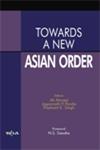
The volume contains contributions by leading Asian analysts and Asia watchers on the theme of prospects for Asian integration. It discusses regionalism at the continental level and investigates overarching trends. It focuses on Asia's 'rise' and the key factors shaping the Asian regional order. The volume also provides valuable perspectives on Asia's sub-regions. Another salient feature of this volume is its coverage of increasingly significant non-traditional issues in the Asian context.
MJ. Akbar brings his English literature background, writing skills and experience as a journalist with a notable body of work behind him to bear on a topic that has been and remains central to the story of the subcontinent—the past and future of Pakistan. That he prefaces his title with tinderbox reveals his pessimism regarding Pakistan's future. For him, Pakistan can plausibly be characterised as a ‘toxic jelly’.
The Indian Army can be expected to deliver on the strategic challenges it faces, although how it does this depends on how it measures up to internal change.




Reopening the Debate on Limited War
The commentary makes the case for reopening the Limited War debate in order to inform explicit articulation of a Limited War doctrine.